Showing posts with label Commercial Reviews. Show all posts

Saturday, 18 June 2011

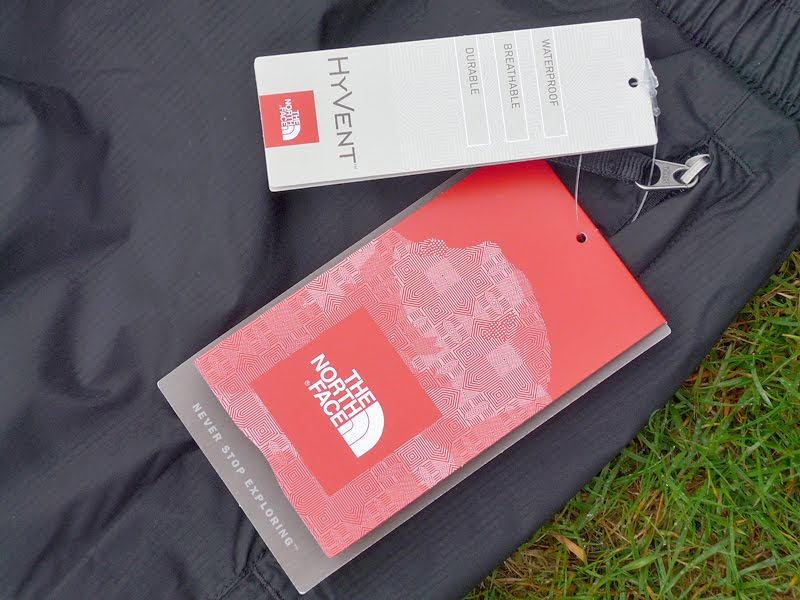
TNF Resolve Over Trousers, Review


I've just received a pair of TNF Resolve over trousers from Webtogs for review. Given the weather conditions recently over trousers could well be a summer essential so it shouldn't take long to find out just how waterproof they are.

The TNF Resolve are made from TNF's own waterproof breathable fabric, HyVent. TNF refer to it as a 3 layer fabric, (the very similar TNF Venture over trousers are referred to as 2.5 layer but are heavier or perhaps lighter* at 220g) the Ripstop outer shell, the mid layer being a PU coating and micro pores and an unspecified inner layer, unspecified unless the mesh lining is classed as an inner layer. I'm fairly certain that waterproof clothing that uses a mesh drop liner is generally considered as being 2 layer, that of course may only be the case when a breathable membrane is used rather than a breathable PU coating.

The over trousers are a fairly slim fit, the waist is elasticated and also has a drawcord, there are 2 zipped mesh pockets but the zips are standard non waterproof type and although they have storm flaps they look quite small. The legs have zipped openings which open to just below knee level, again zips are regular type and like the pockets have quite narrow storm flaps. The ankles can be tightened by way of velcro which is useful. Finally the trousers are fully lined with a fairly open mesh fabric. The advertised weight is 200g.

Design aside it's how well they perform that will be the real issue, I haven't had the opportunity to try them yet so the best I can do is give an initial opinion based on the design.

Firstly and perhaps of most concern is the weight, the suggested weight is 200g, mine in 'Small' weigh 296g. I expect most kit to weigh a little more than advertised but in this case the difference is too much especially as with this kind of lighter weight kit the weight is probably second only to actual performance in importance and it may be the deciding factor when choosing between 2 similar products.


I'm undecided about the pockets, on the one hand I do tend to carry stuff in my pockets but they do have the potential to leak given that the storm flaps are minimal.


The zips on the lower leg do make it easier to pull them on over a pair of trainers but unfortnately the mesh lining tends to get caught up which makes them more difficult to pull on than they could/should be, addditionaly the mesh lining also tends to bunch up and get caught when removing them. I guess the mesh is to make them feel more comfortable when wearing shorts but as I don't wear shorts I find the mesh pointless, serving only to add weight and making them more troublesome to put on/take off.


On initial inspection it looks like the knees are articulated to ease movement, on closer inspection this isn't the case. There are seams running just below the knee but that's simply as the legs are made from 4 pieces of fabric rather than a 2 full length pieces (front/back). This results in having a seam running around the leg but I suspect that's simply to make better use of the fabric at the cutting stage during manufacture. The seams are taped but less seams is usually better unless they're required to create a particular shape.

As I mentioned previously the actual performance will be the critical issue, in the meantime the Pro's and Con's are as follows.

Pro's
Reasonably Inexpensive
Appear well made

Con's
Weigh Significantly More than Advertised (296g Actual/200g Advertised)
Poorly Protected (Pocket) Zips
Mesh Lining (Adds Weight, Catches on Shoes when Putting on/removing)


Clearly the weight is an issue, at nearly 300g it's possible to get something like the RAB Drillium eVent over trousers although it should be pointed out that the RAB's are 2 x times the price.

Interestingly I had a quick look on the TNF.uk website, the Resolve 'Pant' is listed as having an average weight of 360g it does however also mention a "comfortable brushed collar lining" and mentions that, "The adjustable hood stows in the collar"

That's certainly a 1st in my experience.

I also looked at the TNF Strider pant, the Strider appears to be a full zip version of the Resolve but the suggested weight is 270g

Tuesday, 7 June 2011

Keen Gorge Boots, Review


Webtogs contacted me recently to see if I'd be interested in a pair of Keen Gorge boots for review. The Keen Gorge are a neoprene boot not unlike the type I would wear surfing but with a much stiffer sole. They're aimed mainly at watersport activities such as canoeing but the sole design suggested that they were intended for use where a bit of portaging or river walking would be required. Looking at the description on the Webtogs site they mention the high traction sole. The sole has a fairly low profile tread pattern and doesn't have a heel step but the wedge shaped 'fishscales' on the sole are opposing so I felt they'd be grippier than they looked.


I'd intended to wear them without socks which is how I wear my wetsuit boots but in the case of the wetsuit boots it's nescessity as they're a split toe design. With that in mind I requested size 9 in the Keen Gorge but when they arrived they were too small so had to be exchanged for size 10. As it turned out size 10 can stretch enough to allow me to wear socks if I wish.

The boots are promarily neoprene which obviously isn't waterproof, the idea is that they retain water which eventually heats up. My wetsuit boots, Alder Plasma 7mm are winter boots and as such are blindstitched, glued and liquid sealed to reduce flushing (cold water flushing through and displacing the water already warmed) and have kept my feet toasty winter/spring on the North Antrim coast which is essentially the Atlantic. The Keen Gorge however are 3mm and appear to have a basic stitch patter however given that I wouldn't expect my feet to be submerged for anything like the time they would surfing I'd no reservations about warmth.

The sole unit is quite substantial with the trademark Keen toecap which extends up over the toe, there's a decent heel cup and the outside of the toe area is heavily reinforced to prevent wear against the sides of a kayak. Fastening is by a wide velcro strap across the forefoot, in addition the cuff is secured by a velcro patch and for additional security there's a 2nd thinner strap that passes around the back of the ankle above the heel cup and secures at the front which holds your heel in place.


One other thing worth mentioning is the packaging, using recycled materials is a step in the right direction, more information on Keen's 'Corporate Responsibility can be found Here


Having worn basic trainers in my canoe and having had to wade through shallow parts of the river in them and having had experience of neoprene boots I didn't have any reservations about how they'd fare when used as intended. What I wanted to try though was wearing them as walking footwear. I don't like cold wet feet which is why I tend to use wool/wool mix socks or if I expect the going to be really wet I'll use gore tex socks however I had a short walk planned for today which I knew would primarily be on forest tracks or through the forest off trail so decided to try the Keens.

As it turned out I could hardly have picked a worse (or better?) day to try them out. It was raining when Les arrived and continued for most of the time we were out with only a brief dry spell towards the end.

Although we were mostly on a track at the beginning and I could feel my feet getting wet they never felt as cold as they would have just wearing trainers, I put this down to the slow rate at which the water penetrates the neoprene. With water running off my over trousers my feet were soon saturated but at no time did they feel cold.


The boots were comfortable while on the move although the toe bumper is quite noticable when stopped as it seems to down on my big toe. I found it slightly annoying but as I say I didn't notice it on the move, it may well be that it's something that is more/less noticable depending on foot shape.

The sole unit provided plenty of grip on the tracks and off trail through the forest although I suspect that steep slopes with short wet grass may prove to be a problem. As I hadn't had the opportunity to test that I tried walking up a steeply angled wall which was covered in moss and again I didn't have a problem with lack of grip.

I wouldn't expect them to dry quickly so once they're wet you can expect them to stay wet for the duration unless the weather is really warm/sunny. That's just a charcteristic of neoprene, my wetsuit/boots/gloves are just the same so if surfing on consecutive days you just have to put on wet kit but it does warm up quickly. The Keen boots being 3mm should of course dry quicker than my other kit which is 7mm.

Used as intended they look like a good product, for canoeing or packrafting which requires a bit of walking they should be a good option as walking in them is no problem at all. Used as I did as a walking shoe/boot if you're aware of the way neoprene works they work just fine although in warmer weather they're likely to feel a bit hot/sweaty, the solution to that is to step into the 1st stream you find.


Wednesday, 18 May 2011

Primus Express Spider, Review


The Primus Express Spider has been available for some time now and while I’d read the reviews I’d never actually tried one. I was offered one for review by Millets so I was looking forward to seeing how it performed.

The Express Spider has a few features that set it apart from basic canister mounted stoves, the 1st and most obvious is that the burner isn’t directly attached to the gas canister but is instead connected via a flexible fuel line, the 2nd useful feature is the pre-heat facility which helps maintain performance or in some cases allows the stove to actually work in temperatures below freezing when a canister mounted stove could fail completely.

I guess most people considering the Express Spider do so for its cold weather ability but it has something to offer even if you only use it in mild conditions. As it’s a remote canister stove it sits much lower than a canister mounted stove which not only improves stability but also makes it easier to use in a small porch such as those in some solo tents simply as the burner being lower is further from the flysheet. The pre-heat feature while it’s designed mainly for colder weather is also beneficial when it comes to using the last few grams in the canister.

I’ve found in the past with canister mounted stoves that when you get down to the last 10g or so of gas the reduction in pressure in the canister means that there’s insufficient fuel flow to keep the stove burning, it’s not unusual to remove a seemingly empty canister yet when you shake it you can hear that there’s still fuel remaining. What the pre heat function does is allow you to invert the canister, the fuel then flows along the fuel line as a liquid until it reaches the pre-heat tube where it vaporises (becomes gas again) and can burn as normal.


When it comes to low temperatures what can happen is that as the canister itself cools the pressure in the canister drops to the extent that there’s insufficient fuel being delivered to the burner head, this results at best in a slower boil time but the side effect of that is that the longer it takes the colder the canister becomes and thus the pressure continues to drop, eventually the stove will stop even though there’s plenty of fuel remaining. In this situation you can simply invert the canister as you would if it was almost empty, the fuel is delivered as liquid until it reaches the pre-heat tube where again it vaporises and is once again burned as gas. Without a pre-heat tube inverting the canister simply results in liquid gas arriving at the burner head and the result is that the stove flares up which definitely isn’t something you want happening when you’re trying to cook in the porch of a small solo tent.


The Primus Express Spider comes supplied with a small stuff sack that from the outside looks like mesh but on the inside it’s actually plain fabric, I’m not sure why its mesh on the outside but plain fabric on the inside means that the stove is easy to remove and pack as it doesn’t get caught up in the mesh.


The stove itself is really well made and is devoid of any unnecessary features, someone said that a product had reached the peak of development not when there was nothing left to add but when there was nothing left to remove, if that’s the case the Express Spider must be almost as close to the peak of development as it’s possible to get, minimalist but with no useful feature missing.


The legs all fold together for packing but when unfolded each have a stop position to ensure that they’re as stable as possible, being a tripod design means that it’s stable even on a rough surface. The burner head is quite small, smaller than I’d probably prefer as this is a stove I’d use with a wide shallow pot rather than a tall narrow one, 2 reasons for that, 1. A wide shallow pot is more stable and 2. A wide shallow pot is better if you want to melt snow (this is a stove aimed at use in lower temperatures after all) That said in use it seems to work just fine although I’d be inclined to run it at less than full power. One final design feature that I like is that both burner and the fuel valve/regulator can rotate on the fuel line with the result that once set up there’s nothing trying to tip the stove over. Perhaps the only thing I’d like to see changes is the position of the fuel valve, rather than a vertical valve I’d prefer a horizontal valve as it’s easier to operate with the canister inverted, that said it’s not a deal breaker by any means.


With all the potential advantages why wouldn’t anyone want to use a remote canister stove? Well it comes down to bulk/weight over a canister mounted stove. On the issue of bulk the Express Spider fold up so well that it’s hardly an issue, in fact I have a canister mounted stove that while being smaller is more difficult to store due to the larger diameter burner head. If bulk/packed size isn’t an issue them what about the weight? As far as I’m aware the lightest canister mounted stove at present weighs about 48g, most however will come in at between 60-100g, the Express Spider weighs in at 191g with the stuff sack adding another 10g if you choose to use it. If not the lightest it’s certainly one of the lightest.

I’ve tested the Express Spider in what I would consider a real world situation and in breezy condition with an almost full 100g canister with the valve about 2/3rds open it boiled 500ml of water (13.5°c) in 3mins 44secs, obviously that isn’t super quick but by running it with the valve less than fully open it achieved the boil on 8g of fuel and that’s pretty impressive. Of course I nay have achieved a faster boil with the valve fully opened but I’d prefer fuel efficiency for the sake of waiting an extra 30 seconds.

Having tried it with an almost full canister I wanted to see how it performed on an almost empty canister with the canister inverted. The result really impressed me, starting with a canister that had 24g of gas remaining the Express Spider managed a boil in 3mins 47secs and used 9g of gas.

All things considered the Express Spider is definitely a stove I’d have no hesitation in using or recommending, I haven’t read negative reports on any of the blogs I follow and having tried it myself I can see why.

The video below shows the stove in operation with the canister inverted and about 20g of gas remaining. I forgot to weight the canister until I'd switched the camera off but for what it's worth it weighed 104g.

Saturday, 14 May 2011

Eurohike Double Jet Storm Lighter, Review


I got a few bit's and pieces recently from Millets for review including the Primus Express Spider which really needs no introduction but hopefully I can add something useful to the reviews already out there. First though I'm going to look at the Eurohike branded Double Jet butane storm lighter.

I've tried a few butane storm lighters in the past but was left unimpressed with the result that I went back to using cheap disposable lighters. The 1st one I tried was a Turboflame, it worked for a while but it was extremely temperamental and surprisingly didn't like the cold. I found that in temperatures around freezing that it wouldn't light even if I'd had it in my trouser pocket. Refilling was a pain too, the instructions for refilling ran to 10 steps, See Here the 10th step advising repeating steps 1-9 if it didn't work (since I posted this I've managed to locate the instructions that came with mine, mine had a 9 step filling procedure, step 9 advising repeating steps 1-8. In addition just below the refilling instructions it warns that "Turboflame works best at room temperature, in cold conditions warm up in hands before ignition"). The other things I disliked were that there was no way of telling how much gas there was remaining and the flame adjustment was difficult to use in the kind of conditions you'd actually need a specialist lighter. In the end the piezo ignitor button return mechanism broke probably due to repeated attempts to get the lighter to actually work.

Next up I tried an unbranded storm lighter bought from ASMC in Germany, it was much more fragile looking than the Turboflame but only cost about €5. It worked well, much less temperamental than the Turboflame but eventually it too stopped working. What I discovered when I took it apart was that it was really nothing more than a small generic storm lighter in a tougher looking plastic and rubber shell although I didn't realise the significance until after buying my 3rd Storm Lighter.

The 3rd Storm lighter was an impulse buy, I'd been in Cotswold in Belfast and as they didn't have what I was looking for I bought the Silva Helios. It really looked the part in the packaging with a tough looking body that appeared to be alloy with rubber grips, it also came in a nice presentation tin and was supplied with a lanyard. I was pretty disappointed when I got it home and opened it to find that the 'alloy' body was in fact plastic, things went from bad to worse when it stopped working later the same evening and as if that weren't enough under the tough looking shell the actual lighter looked identical to the cheap unbranded version from ASMC. Although I probably had one that was faulty and I don't believe that they're all as unreliable as mine yet the Helios cost £17 and given that the lighter part was the same as the unbranded/£5 one I'd effectively paid £12 for the presentation tin!! I'm not sure if there's any significance in the fact that I can't find the Helios on the Silva website, maybe I've missed it or maybe they no longer stock it.


Having given up on 'Outdoors' lighters I simply went back to disposables, normally ones with a clear reservoir that let you see how much gas remains. It was only after being asked by Millets to choose a few items for review that I even considered using a 'Storm' type lighter.


When the Eurohike Double Jet windproof lighter arrived the 1st I did was fill it, no instructions required. Once filled I adjusted the flame using the large knob on the base and it fired up straight away.


The lighter isn't metal bodied but it does feel quite robust weighing in at around 85g, it's symmetrical with the raised section that holds the latch button being replicated on the opposite side where a lanyard can be attached.


The body has a flip up lid to protect the actual burner head and that looks to be the only weak point as the hinge is quite small. The body is quite tall yet tapers nicely so it's easy to get it out of a trouser pocket, that said the absence of any rubberised grips makes it a bit slippery. Where I find it better than my regular disposable lighters is that it'll work even if my hands are wet and as the flame is directional it's easier to light stoves light a Trangia where you need to point the lighter down to reach the fuel.

There are a couple of gimmicky features though, 1st and immediately obvious is the small compass set into the lighter body. I suspect it's more of a styling exercise than of any real use but if I was really upset about it I could just break it off, to be honest I think they should just omit it as in my opinion it cheapens the appearance of the lighter.


The 2nd gimmick in my opinion is the double flame, I don't see it as serving any purpose and I suppose it must mean that the lighter uses 2x times as much gas, that said I've been using it for over a week and it hasn't been refilled since I got it. The one other thing I'm not keen on is that it doesn't have a 'window' to let you see how much gas remains but that is a fairly common feature with lighters generally.

Obviously I can't comment on long term durability but so far it's lasted longer than my Silva Helios which failed within hours. As far as performance is concerned it's vastly more reliable than my Turboflame, easier to fill easier to adjust wearing gloves, it also feels more durable than the £5 from ASMC. It's a good product in my view and works as a lighter should without any unnecessary faffing around, at £7.99 if you need a 'Storm' lighter it's worth considering, definitely don't be put off by the compass or the double flame feature.

Tuesday, 3 May 2011

Eurohike Non-Stick Pan


I had the chance to pick a few items from the Millets own brand Eurohike and Peter Storm range recently and in addition to the Peter Storm Carrick Interactive fleece I choose a Eurohike non-stick frying pan. For some reason I didn’t check the size or weight, I think it was the general shape that attracted my attention so when it arrived I realised it was going to be too big (diameter 250mm) for solo backpacking. All was not lost however as I had the canoe trip planned and it looked like it would fit the bill, in addition for family car camping it would be a good alternative to our regular household pan.


My 1st impression of the pan was that it was a nice useable shape with nicely shaped shallow sloping sides and the build quality looked top class. The handle folds away and when opened clips into place very securely indeed with no trace of wobble, it’s also well insulated with a thick coating, it's actually thicker in reality than it appears on the website although the coating on mine is orange rather than black so they may have changed it slightly.

The label attached to the pan states the it’s “A durable steel pan with a thick non-stick coating” however the base is stamped with the words “Non Stick Aluminium” Judging by the feel I’d say it is indeed aluminium. The base of the pan is grooved which should make it less prone to slipping off the stove which is a nice detail touch.


The advertised weight is 450g but mine comes in at 478g, if it was something I’d backpack with I’d be disappointed but for my intended use it doesn’t matter much. In use it was perfect, used on an Optimus Nova running on Paraffin it was easily up to the task of frying 8 fat sausages and the non stick surface and anodised outer was easy to clean even using cold river water. The only thing that I can fault is that it would have been nice if it had been supplied with a stuff sack, apart from that there’s not to dislike about it and it looks much more expensive that it is at £12.99.

Sunday, 17 April 2011

First Look, Peter Storm Carrick Interactive Fleece


I mentioned on my last post that I'd received some kit from Millets, one of the items was a fleece jacket. The Carrick I.A. is a regular fleece jacket similar to offerings from a variety of different brands. The fleece fabric, 'Thermotech 200' isn't quite as soft or thick as e.g. Polarfleece 300 but feels a little more wind resistant although it isn't a laminated windproof fleece as such. Having checked the size chart I requested a 'small' and the fit is pretty good, length is about right for me, while it isn't a close athletic cut it isn't baggy and the sleeves are about right which I often have a problem having long arms.


The sleeves are regular style rather than raglan style and the cuffs are simply made from the same fabric as the rest of the jacket. Fit is a personal thing but I found the cuffs just about right, not too tight and not too loose. There's a shock cord around the hem with a captive cord lock at each side to allow it to be tightened in to reduce drafts.


The jacket has 3 pockets, 2 zipped hand warmer pockets and a chest pocket with a vertical zip which is as much as I would need. The chest pocket holds an OS N.I. 1/50,000 scale map (180mm x 110mm) but is too short for a 1/25,000 scale map and I suspect too short for a Landranger 1/50,000 UK map. I noticed that there were 2 small elastic loops near the bottom of each sleeve just above the cuff and at 1st I wondered if they were for attaching gloves but I remembered that it's an 'Interactive' fleece so they're probably for attaching it to a waterproof shell.


There's one small detail that I should mention and that's the seam running along the shoulder, it isn't something that I've ever had a problem with but I know some people are sensitive to seams on the shoulder when carrying a pack. The seam is slightly bulky although the fabric is soft so if you suffer in that department make a point of checking it out in case it is a problem.


I wore the jacket on Saturday when out on the hill and found it worked fine, that said I don't ask much from a fleece, in my view if it fits, insulates, drys quickly and provides secure storage for a few odds and ends then it does the job. With that in mind I'm not inclined to spend too much on a fleece, it does depend on what you want.

The normal price is £34.99 and at that price it's good value, that it's currently available at £27.99 is even better.

Sunday, 3 April 2011

Adidas Terrex Seamless


I received a pair of Adidas Terrex Seamless trainers from Webtogs recently, I'd had a choice of TNF Hedgehogs, Keen Alamosa but choose the Terrex Seamless for a variety of reasons. Although popular, Gore-Tex (or eVent) lined shoes aren't a favourite of mine, I find them ok on tracks/paths but on sofer ground or long wet grass you inevitably end up with wet feet as shoes being shoes aren't high enough and once they get wet inside they take a while to dry, on that basis I ruled out the TNF Hedgehogs.

I ideally wanted something that I could use when canoeing as well as walking so ultimately choose the Terrex Seamless as the lack of stitching and close woven fabric looked like it would be more splash resistant and less likely to retain mud etc than the more open fabric on the Keen Alamosa, additionally I liked the lacing system as it looked less likely to get caught up on the seat etc fittings in the canoe. Gareth at Webtogs advised me that Adidas can be a bit small fitting so I tried a few pairs of Adidas sports trainers locally to check and sure enough size 9's which are my normal shoe/boot size were a litle tight so I asked for size 10. The shoes duly arrived and the 1st pleasant surprise was the weight or lack of, prior to opening the box I could have easily been convinced that there was only one shoe inside, fortunately both shoes were present.


The shoes are marketed as 'Seamless' and although I didn't go over them with a fine tooth comb the visible joins are indeed stitch free. The fabric is quite closely woven and looks quite similar to wetsuit faric (neoprene with a face fabric) but of course it feels quite different. I'm not sure how the joins are achieved, I suspect they're bonded so there may be a question mark over long term durability. When it comes to fit everyone is different, I find I'm pretty tolerant when it comes to footwear so the Adidas are fine, the only thing is that I need to compromise slightly as if needed I wear Gore-Tex socks. With that in mind the Terrex do need to be laced tightly when I'm not wearing Gore-Tex socks and it's worth considering that the lacing doesn't extend down the toe as far as on some other trainers.


I mentioned the lacing system, I'm sure there's a name for it but it escapes me, suffice to say that it consists of a very fine cord which is locked by a cordlock and I imagine it'll be less prone to freezing than regular laces, a problem I've had on my current trainers. Of course it may be more prone to slipping but as yet I haven't noticed a problem. The tread pattern isn't very deep, again this can either work well or not at all, I've found that while a deep tread can provide better grip it can depending on the design be prone to clogging, something I've noticed on both my Meindl Borneos and AKU Crodas, a shallower tread while offering less initial grip clears more easily, the very shallow teead on my Karrimor Pro Run trainers being a good example.


The Terrex sole falls closer to the shallow tread of the Pro Runs than the deep tread on the AKU Crodas but ultimately regardless of depth/pattern some will work better in certain conditions than in others. I haven't yet tried the Terrex in muddy conditions but on short grass and dry rock it's been fine so far. On the water repellancy I've noticed that the Terrex shed water very well, how much is down to the fabric weave and how much is down to a DWR is too early to say, they obviously aren't waterproof but they should be breathable. On breathablility I feel that they're perhaps slightly less breathable than mesh fabric unlined trainers, it's still to early to say though and short of wearing one of each it's probably going to be nigh on impossible to comment with any degree of accuracy. I found them to be pretty quick to dry but obviously as they have a slightly padded inner they will retain more water than my Karrimor Pro Runs which are almost entirely mesh with little or no inner fabric at all. Of course the Karrimor's are very thin and obviously wouldn't be to everyones taste. Unfortunately due to other commitments I haven't had a chance to really put the Terrex Seamless to the test. I did manage a short walk on the North Coast and on the varied rock the grip felt good and so far though I'm delighted with them.


As with any gear there are compromises and you have to decide which compromises work best for the intended use. I wanted a trainer that was comfortable for walking, reasonably water resistant but with ease of drying more important. The smooth face fabric while it may prove to be less breathable than mesh doesn't retain mud etc which helps keep the floor of the canoe clean which is desirable when you're kneeling. The quick lacing system is easy to operate even when the shoes are wet where regular laces can be difficult to untie once they're wet and the knot has been pulled tight, additionaly thanks to the elastic loop the cord is out of harms way where it can't get caught on fittings in the canoe just as you're about to stand up to pole rather than paddle. For those interested in the weight they come in at 760g pair/Size 10 which is pretty good.


I'm looking forward to trying the Terrex Seamless in different terrain and will update when I have more information. In the meantime James at Backpacking Bongos has been testing the Terrex Seamless on the hill so plenty of good information there. While you're there take time to read James's great trip reports from less well documented areas.

Saturday, 26 February 2011

Mountain Hardwear Micro Chill 100wt Fleece


Mountain Hardwear Micro Chill

When it comes to fleece I tend to just buy cheap ones from places like Primark rather than from outdoor shops and to be honest the ones I have work fine. I have one fleece jacket by Mountain Equipment from years ago but it’s made from what was called Ultrafleece (also known as Karisma or K2 fleece) and is quite thin but slightly more wind resistant than regular polar fleece. In addition when I started to get back into walking I bought a thin fleece zip neck from the Mountain Warehouse, similar to 100wt fleece but I’ve rarely worn it. The cheaper fleece stuff I own is similar in weight/thickness to 200wt polar fleece and I have a couple of zip neck pullovers from Primark and a full zip hoodie from Uniqlo mentioned previously.

Just recently however I received a Mountain Hardwear Micro Chill zip neck from Webtogs for review. The micro chill is made from 100wt Polartec Classic and while it’s nice enough I can never quite decide if 100wt fleece is a heavy base layer or a light mid layer, and I’ve never really felt that my ‘wardrobe’ was lacking.


The Mountain Hardware Micro Chill is at 1st glance a fairly basic design, a zip neck with no pockets, loose cuffs and no means of tightening the waist. In this respect there doesn’t appear to be any reason to choose it over similar garments from other brands. On closer examination there are a few things that are probably worth mentioning.


The seams are flat stitched for comfort and the sleeves are raglan style which means there are no seams on the shoulders, the other nice touch is the way the neck zip is finished off, there’s a little pocket that the puller sits in when fully zipped so you can’t feel the zip when it’s fully zipped.


I checked out what else was available from the other Brands in similar style and using the same fabric and there are a few with TNF making 3 very similar looking zip neck pullovers, the Khyber, Glacier and Glacier Delta, Mountain Equipment have the Micro Zip T. Comparing them I couldn’t really see any reason to choose one over the other apart from maybe the Mountain Equipment one which has a zipped chest pocket and given a choice that‘s probably the one I‘d go for although if used as a base layer the pocket won‘t be accessible and having no waist draw cord rules it out as a mid layer for me.

I wanted to take my canoe out at the weekend so decided that rather than wear my Paramo VAL over a base layer I’d try the Mountain Hardware Micro Chill instead. With only a long sleeve base layer under the Micro Chill I was warm enough as I was wearing a buoyancy aid although I did need to pull on my Montane Flux once I’d stopped for a snack and had taken my buoyancy aid off.


In use the Mountain Hardwear is ok but not outstanding, I certainly wouldn’t rush out to buy one. I haven’t found myself needing a 100wt fleece and even if I did there’s nothing that makes it stand out from the others. As far as I’m concerned it really comes down to the intended use, if it’s a base layer then I’d choose from the ones mentioned above and make my decision based on fit, if it’s a light mid layer then I’d be looking at something with pockets, hem drawcord and probably a full zip. To be honest it doesn’t offer much that I can’t get from a £4 fleece from Primark and at £40 it’s just too expensive for what it is in my opinion. You can get perfectly adequate fleeces on the high street but of course they’re not exactly technical, unfortunately neither is the Micro Chill. It could be argued that the Micro Chill is worth the asking price as it’s made from a premium fabric but the thing that goes against it in that respect is that for an extra £10 you can get the full zip version by Mountain Hardwear which adds a zipped chest pocket, 2 x zipped hand warmer pockets, dual waist draw cords and internal cuffs and those features take the jacket to another level above what you would get in a generic high street fleece.

Monday, 29 November 2010

Commercial Reviews.

I had an e-mail from Gareth at Webtogs a few weeks ago asking if I'd like to review some kit, my initial reaction was that I was flattered but on thinking about it I wasn't sure if I wanted to go ahead with it. I've purchased a few items from Webtogs in the past and had no reservations about their service but felt that I'd be a bit pushed for time to actually do product reviews. I phoned Gareth to thank him for the offer and had intended to say no but after some discussion he persuaded me to give it a try on the basis that if either of us thought it wasn't working we'd call it quits. Initially it was suggested that I'd recieve an item every month or so but at my request that has been reduced to every 2 months or thereabouts.

In a nutshell they'll try to send something that I'd actually use but I may also be expected to review something that I wouldn't normally choose. The gear will be tested in the field and I'm free to post my opinions on my Blog without any influence.

So you may be wondering whats in it for me, well if it's not an expensive item I get to keep it so I expect I won't have to return a pair of fleece gloves or the like, more expensive kit such as I guess fleeces, shell jackets and so on will need to be returned. To be honest that suits me fine, I'm trying to simplify my gear not add to it.

For the benefit of anyone looking at a review any items that I haven't paid for will be clearly marked as such. To date the only item I recieved for review that I didn't actually buy was the MSR Reactor which Hendrik at Hiking in Finland sent out to a few bloggers as part of a pass-around. I didn't get to keep the Reactor unfortunately but I did eventually buy one.

At this satge I haven't received anything as I need to sign and return the T&C's, basically I don't post reviews on websites of a dubious nature and don't blame Webtogs if I kill myself.